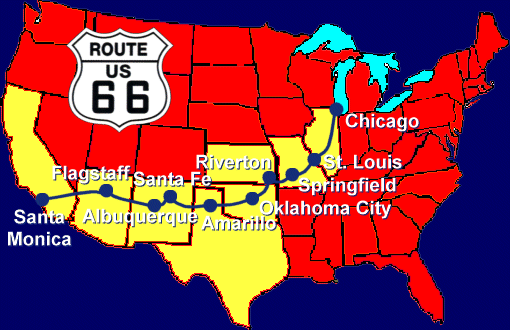
 Route 66 During the 1930's
 Traffic on the highway increased initially because of its flat nature and the cities and towns which it passed through. These traits appealed to shipping companies, making Highway 66 a popular truck route. Also, during the 1930's, the Dust Bowl caused many families from Oklahoma, Arkansas, Kansas, and Texas to move west to California, hoping to obtain agricultural occupations. For these "Okies," Route 66 was the main thoroughfare for their westward journey. The increase in traffic helped to stimulate the economy of the small towns through which the highway passed. Small, mom-and-pop businesses began to grow, including restaurants, service stations, etc. Some of these businesses are still around today along the former route that the highway took, and are either open for business or open to tourists.
 Route 66 was similar to most other highways in the respect that it consisted of gravel and graded dirt. However, in 1938, it became the first highway in the United States to become fully paved. Although safe in most places, some dangerous sections contained hairpin turns and were nicknamed "Bloody 66." Many gruesome accidents occurred on these stretches, and eventually most areas of risk were improved to be less dangerous.
Route 66 provided migrants, such as the Joads, with an easy way to move west. Once on the highway, one did not need to do anything else besides continue driving on the highway--no further directions were needed to reach their destination on the West Coast. Without the highway, relocation westward would have been much more confusing and surely less appealing. By sharing a common path of travel, migrants were able to help each other if their cars broke down, or if they needed general assistance. The bottom line is, Route 66 was crucial to the Okies who were escaping the Dust Bowl during the 1930's.

Picture on the upper right not showing.
ReplyDeletePretty sure you could write chapters for APUSH textbooks.